Common questions from agencies and dev shops
If our client carries the legal obligation, why is this our problem?
Title II liability sits with the public entity, not the contractor. The pressure on your team comes from the procurement and contractual side. RFPs increasingly require a stated conformance level, contracts include WCAG 2.1 AA warranties, and renewals are easier when you can point at the evidence trail. A client whose site fails a complaint or DOJ review will look at the vendor who shipped it, even if the legal letter is addressed to them.
What evidence does our client's accessibility coordinator actually need?
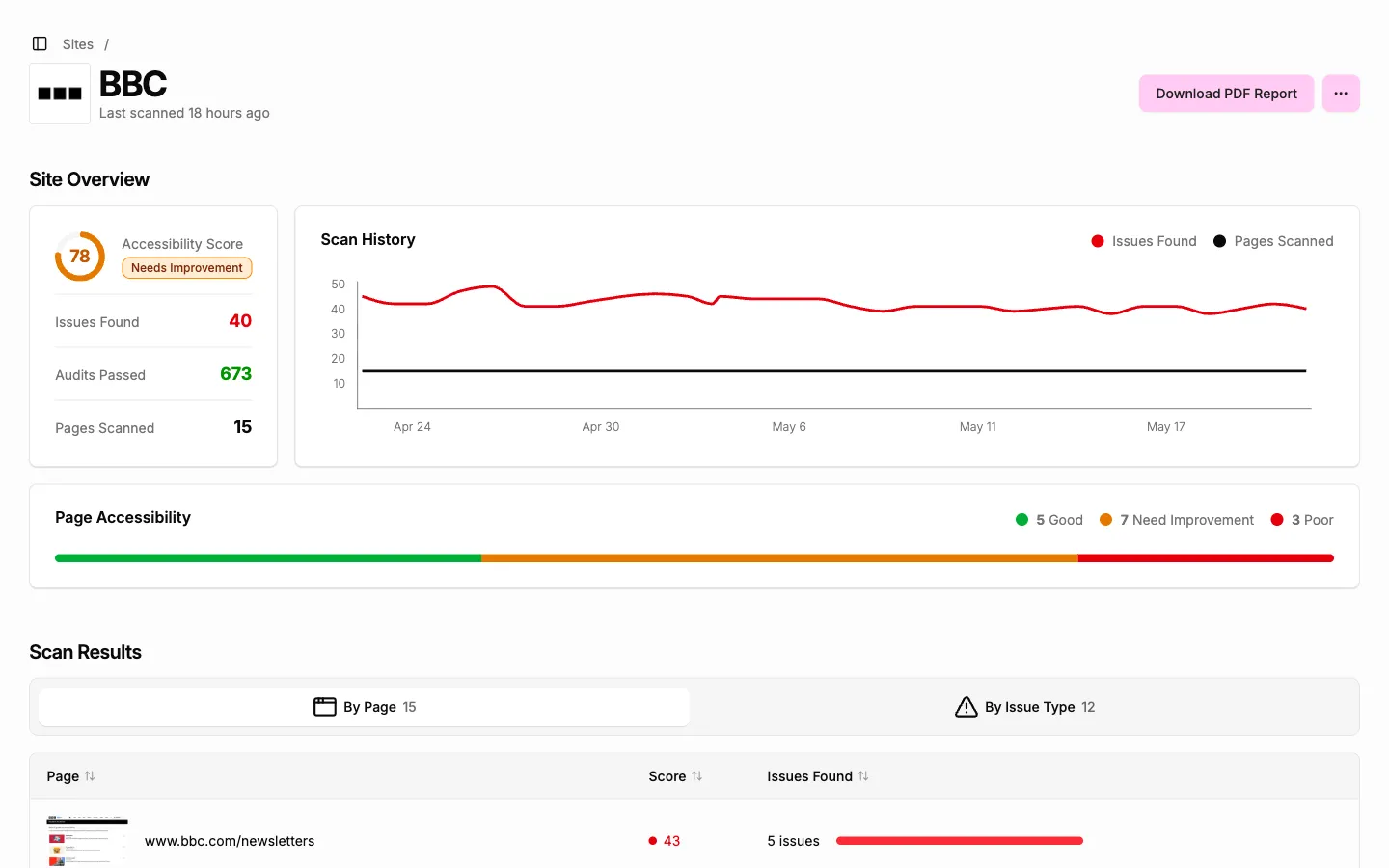
Most coordinators want three things: a stated conformance level (WCAG 2.1 AA), a remediation log showing what's been fixed since launch, and a regression policy that catches new issues before users complain. The exportable PDF report A11y Pulse generates covers the first two on demand, and the daily scan history backs the third.
Does this affect existing contracts or only new procurement?
The DOJ rule applies to the web content the government makes available as of the compliance date, not to the contract under which it was built. Sites you shipped two years ago need to meet WCAG 2.1 AA by the same April 2027 or 2028 date as anything new, so legacy projects still under maintenance carry the same exposure as new ones.
What about subcontractors and flow-down clauses?
Government contracts increasingly include flow-down clauses requiring the same WCAG 2.1 AA conformance from subcontractors touching the site. If you outsource front-end work or use a third-party CMS implementer, the practical answer is to put the same monitoring across whatever they ship and treat the scan dashboard as the shared source of truth on conformance.
Do automated scans satisfy the requirement on their own?
No. Automated scanners catch roughly 30 to 50 percent of WCAG issues, including the most common ones (color contrast, missing labels, alt text, keyboard focus). A11y Pulse goes further with its own audits that interact with pages how real users would. The rest need human judgment. Most accessibility coordinators are fine with automated daily coverage as the backbone and periodic manual review for the remainder. A11y Pulse pairs cleanly with whichever audit partner your client already has, and the PDF reports work as the input they audit against.
What happens at the compliance deadline if we're not there yet?
Non-conformance after the deadline doesn't trigger automatic fines. It opens the door to DOJ enforcement and to ADA complaints from members of the public, which is what most government clients are trying to avoid. The realistic risk for an agency is a renewal or recompete that asks for evidence you don't have, or a complaint the client traces back to the site you delivered.